

Why Anxiety Often Shows Up And How Counseling Helps
Did You Know That Anxiety Isn’t Random?— It’s Protective
Anxiety is protective, not just random. At Santos Counseling, we often find that a misconception about anxiety is that it’s a flaw or malfunction.
In reality, anxiety is a protective response to internal and external things. Think about it this way: your brain’s job is to help you survive. It’s something that humans have been doing since existence.
Long before modern life, anxiety helped humans:
- Detect danger
- Stay alert
- Prepare for threats
- Avoid harm
Our nervous system is constantly in the mode of scanning for risk. It’s automatic. Even when we are not aware of it, the nervous system is scanning for uncertainty, overload, or perceived danger. This is where anxiety shows up as a warning signal.
The problem isn’t that anxiety exists. Remember, we need the nervous system to do its job. The challenge happens when the nervous system stays in survival mode too long. Here is a helpful resource from Harvard on understanding the nervous system and stress response.
Anxiety Often Shows Up During Transitions
Did you know that during uncertainty, the brain turns on its threat system? This can happen during an intense transition or ongoing small ones that create a pattern. It’s important to know that the threat system doesn’t always turn on or become activated because of a negative event. The event can be one that we perceive as bad or threatening when, in fact, it is not.
Anxiety often increases during:
- Starting a new job
- Moving (such as moving homes or a child going to a new school)
- Becoming a parent
- Graduating
- Relationship changes
- Health scares
- Financial shifts
- Retirement
- Even positive growth
What Happens To the Body When It’s Anxious?
As mentioned before, when the nervous system is not able to slow down and reset, it can lead to a higher level of anxiety symptoms. This is because the brain stays in a heightened state of alert.
This can look like:
- Discomfort in the chest in the form of a tight chest
- Racing heart
- Shallow breathing or difficulty establishing regular breathing
- Pressure in the body in the form of muscle tension
- Stomach issues
- Headaches
- Restlessness
- Fatigue mixed with agitation

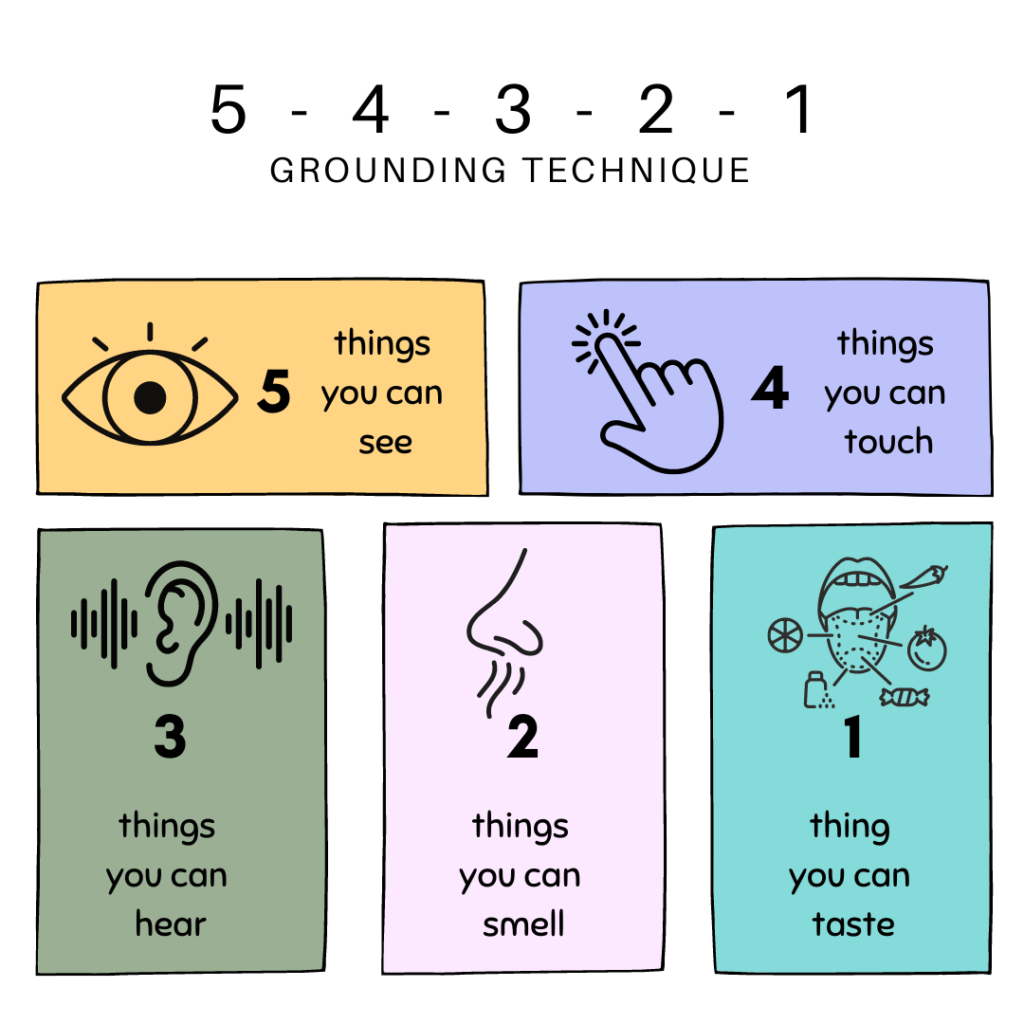
What Actually Helps Anxiety (Long-Term)
When to Consider Professional Counseling?
You don’t need to be in crisis to benefit from counseling. It may be time to reach out and work with a counselor if:
- Anxiety is interfering with daily life
- You feel constantly on edge
- You feel overwhelmed
- You’re avoiding things you used to care about
- Your sleep is off and consistently disrupted
- You feel stuck in your own mind
-
You’re exhausted from managing it alone
At Santos Counseling, we offer in-person and telehealth counseling for anxiety, depression, trauma, and relationship concerns. CLICK HERE to see which counselor is a good fit.