
Therapy For Men In Greensboro, North Carolina
Are you seeking a male counselor that gets you? That can sit with you, talk about barriers, show compassion, and understand your unique experiences and perspectives.
When people seek counseling with Santos Counseling, they often look for someone who can truly understand them. Our team of counselors aim to give you a space where you feel understand. For this means that their is a preference in the type of counselor they work with. Finding a counselor that hold specific mental health training or who shares certain characteristics is important.
This reading aims to help you explore why someone might seek a male counselor, the benefits of doing so, and how to find the right fit. Our goal at Santos Counseling is simple. We want you to feel comfortable with your counselor.


Therapy can have many benefits for men:
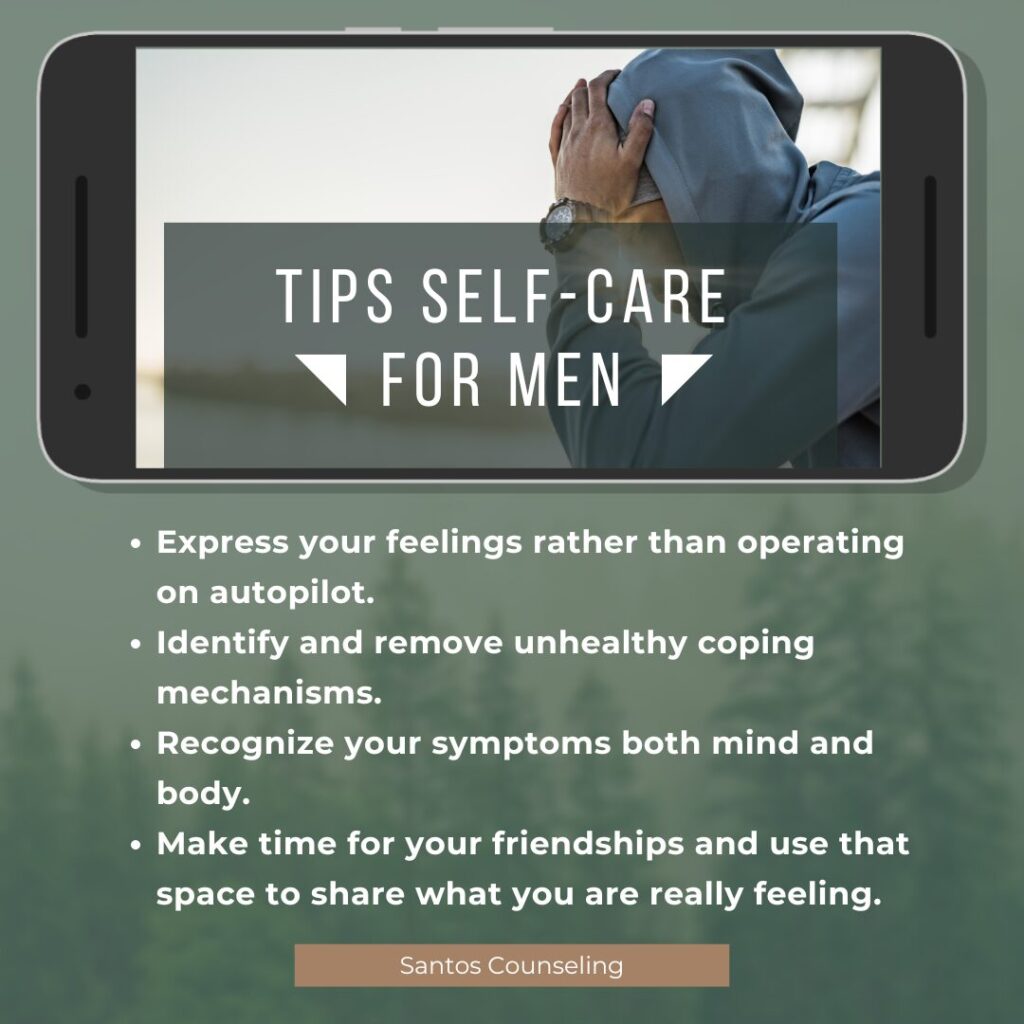
- Increase awareness of what you are feeling.
- Improve confidence and self-esteem.
- Learn how to practice healthy copings skills.
- Address emotional challenges connected to depression, anxiety, and other emotional difficulties.
3 Barriers Men Experience In Seeking Counseling
I thought it would be helpful to explore barriers and the importance of finding the right counselor. Santos Counseling open it’s doors to the Greensboro and surrounding community in 2014. We have learned from our clients the importance in breaking barriers and creating a practice focused on the client and counselor relationship. To add this point, take a look at ACA article, The Recipe for Truly Great Counseling by clicking here.
1. Understanding of Societal Pressures.
Men often start counseling because of challenges connected to societal pressures. The challenges typically lead to men keeping feelings and thoughts to themselves. Keeping things to oneself overtime leads to pressure building and we know what takes place when too much pressure gets built up.
Working with a counselor can help men get a clear understanding of common societal pressure and learn how to get away from suppressing emotions or conforming to traditional roles.
Working with a male counselor can provide a unique perspective. This is very similar to working with a counselor who has personally lived an experience you have or one that may share a cultural connection to you. This is not a clear indicator of success, instead it is a factor that can help the process of counseling.
Having a shared understanding with your counselor can create a stronger connection and foster a sense of safety.
2. Men Overcoming The Fear of Therapy
Research suggests that having a male counselor can give you a constructive space where you can challenge maladaptive thoughts. I encourage you to consider what fears or even worries do you hold that keep you from working with a counselor? Are they connected to who the counselor is? Would having a male counselor make the process easier?
The AAMC bring attention that men often struggle to seek counseling due to bias and assumptions connected to how men should be, societal pressures, fear of judgment from friends, family, and peers.
3. Suppressing Feelings
Often men will experience a unique type of upbringing that is filled with messages of ignoring issues, being strong, not being weak, or being told to not show emotion. The suppression of feelings can lead men to feel overly stressed and overwhelmed.
When it comes to seeking counseling, men often experience a push from society that they need to talk about their feelings. This can often make men feel pressured, uneasy, and embarrassed about what they are going through.
It’s important for men to know that ignoring emotions and suppressing them can negatively impact the body. When your body holds everything in, it’s likely that you’ll experience physical pain, racing heart-rate, difficulty breathing, and other unwanted feelings.
What does the research say about men and mental health?
When it comes to men and mental health, we must hold awareness of suicide. According to the CDC suicide is a leading cause of death among men. According to the National Institute of Mental Health (NIMH) 1 in 5 adults experience a mental health difficult. The research is connected to the U.S.
Research from Harvard Health Publishing Medical School depression is listed as one of the most common reasons that men seeking counseling. What I encourage you to consider is the list of factors, events, or experiences that can lead to depression. Men may experience adverse childhood experiences (ACE) or life transitions that can trigger unwanted and difficult symptoms of depression.
What Are The Common Reasons Men Seek Therapy
Men often seek counseling to focus on addressing mental health difficulties connected to depression, challenging early childhood experiences, marriage, and work issues. Below are common reasons that men seek counseling:
- Address stress connected to work and career.
- To learn how to create balance between work and family.
- Work on becoming a better parent.
- Heal from past childhood and early experiences that are continuing to impact you to.
- Develop healthy coping skills to address emotional difficulties connected to depression, grief, anxiety, or stress.
Why Men Wait Too Long to Start Therapy
Research on men seeking therapy brings attention to the wait. Men are half of the population and about a third of therapy clients. I find that from my viewpoint as a male, the gap isn’t because we’re doing better. It’s because most of us were trained by family, by work, by every locker room we ever walked through. I find that many men are taught to treat needing help as failure.
So men often wait until the marriage is on the edge. They wait until the drinking is a problem. Some men wait until the anger scares someone they love. Or until the anxiety is impossible to work through.
The men who come in for counseling at Santos Counseling say, “I probably should have done this years ago”. I’ve been a counselor for over a decade, and much of my work is connected to therapy for men. This is something almost every one of them says exactly that.
My hope is that if you’re reading this page about men’s therapy, you’ll take the next step and begin counseling. Whether you’re struggling with stress, anxiety, relationships, anger, fatherhood, depression, or simply feeling stuck, therapy can provide a space to gain clarity, build resilience, and move forward with confidence. Taking this first step may be one of the most important investments you make in yourself and the people you care about.
What Men Actually Come to Therapy For
Below are a few common reasons that men seek therapy.
- The relationship is on the line. Your partner is done being the emotional load-bearer for both of you. You know something has to change, and you don’t know what.
- The anger is showing up in ways that scare you and others. Snapping at your kids. Getting called out by your co-workers. The tone you take with your wife. Sitting in your car after work because you can’t walk in the door yet.
- The drinking is doing more of the work than it should. You’re not “a drinker.” But you’re using it to come down every night, and you know it.
- The job is eating you. Working through the burnout instead of admitting it. Wondering if this is just what work is now, or if something’s actually wrong.
- You went through something. A death. A divorce. A firing. Something you told everyone you were “handling.”
- You don’t feel anything anymore. Not sad exactly. Just flat. Which is a thing. And it’s treatable.
- The kids are watching. You don’t want them to grow up with the version of you that’s showing up right now.
Our Male Therapists in Greensboro
Santos Counseling has several male therapists on staff. Click here to learn more about the male counselors on staff. You’ll find that each holds a unique experience and approach. All of the male counselors hold a minimum of a Masters Degree; they are licensed therapists through the North Carolina Board of Licensed Clinical Mental Health Counselors.
Dr. Juan Santos, the practice’s clinical director and owner of Santos Counseling. He is an active member of the Greensboro community, where he is involved with the Chamber of Commerce, Winston Under 40 Leadership Awards, is a board member of Big Brother Big Sisters, a member of the Latino Coalition, an active alumnus of UNCG, donates to a park, and active member of F3, a men’s outdoor workout and fellowship group in Greensboro.

What are signs and symptoms of mental disorders in men?
Most people show specific sign and symptoms when it comes to mental health. Common examples include headaches, feeling on edge, problems focusing and concentrating, comparison, muscle tension, or sadness. Below are signs and symptoms that men experience in connection to mental health. As you review each, keep in mind how the sign or symptom impacts your mental health.
1. Physical Pain.
Men often share that they are getting headaches or muscle tension. The physical pain is often associated with mental health symptoms.
2. Social Isolation.
I think most adults can relate to the social struggle that making and maintaining friends in adulthood comes with its challenges. A study from Psychiatry Research discussed risk of loneliness being associated to dementia and cognitve decline, depression, heart disease, obesity, and premature death.
3. Significant/Unexpected Life Changes
Being able to cope with unexpected life changes requires a level of resilience, compassion, and patience. Many people will often try to avoid changes by spending energy on creating ways to avoid it. A common sign of needing to work with a counselor is the mental health impact that comes with an unexpected life change. Common unexpected life changes include job loss, divorce, the passing of a loved one, and other difficult life experiences.
For more supportive reads on mental health click the links below:
Counseling for Men: How Our Approach Is Different
A common thought is that therapy is mostly talking. I’m here to share with you that therapy can be much more. As a counselor, I pull in a variety of tools to enhance the therapy process. We may walk, do yoga, meditate, and the list goes on. A lot of men, especially at the start, aren’t ready to. So we don’t force that.
- We start where you are. Not where the intake form says you should be.
- We move at the pace in therapy of what’s actually workable. This means that therapy is not at the pace that makes therapy feel like homework.
- We give you real tools. At Santos Counseling, our goal is to give you tools that you can use in varying situations and spaces of life. Not just a place to vent. Coping strategies for anger, sleep, panic, resentment, communication with a partner who’s fed up — things you can use before the next session.
- We hold you accountable without shaming you. Men respond to being told the truth. We tell it, kindly.
- We work with your life. Our counseling office has openings early in the morning, evening, and Saturday sessions available, in-person or online, in English or Spanish.
Common Concerns We Work With
Below is a list of common concerns that men share they are experiencing when they seek therapy.
- Anxiety and panic
- Depression and low motivation
- Anger management
- Substance use and drinking that’s gotten heavier than you want
- Relationship problems and communication breakdown
- Divorce, separation, and co-parenting
- Grief and loss
- Career burnout and work stress
- Trauma (including combat, first responder, and childhood trauma)
- Fatherhood. This is especially the “am I doing this right” version
- ADHD and executive functioning struggles
What to Expect in Your First Session
You are almost there and ready to schedule your first counseling appointment. The first session is a conversation and not a detective interviewing you. It’s relaxed and light. You’ll tell your therapist what’s going on in as much or as little detail as you want. You get to decide the pace. The counselor will ask some questions.
You’ll leave the counseling session with a clearer picture of what you’re dealing with and what the next few sessions would look like. There’s no couch. There’s no “and how does that make you feel.” There’s a chair, a licensed therapist who’s had this conversation with a lot of guys, and 50 minutes to actually get somewhere.
Most men meet weekly at first, then space out sessions once things stabilize. Some come in for 12 sessions to work on a specific problem and are done. Others stay longer.
Frequently Asked Questions About Mens Therapy
Do you have male therapists at Santos Counseling?
Yes. Several members of our counseling team are licensed male therapists, including our clinical director Dr. Juan Santos. When you call, tell the office you’d like to see a male therapist and they’ll match you appropriately.
Do I need to have "something serious" going on to start therapy?
No. Some of the most productive therapy is preventive. Men who come in before there’s a crisis work on communication, boundaries, or stress, and never let it get to crisis. Waiting until it’s bad is common. It’s not required.
Can I do therapy online instead of coming into the office?
Yes. We offer secure video therapy to anyone in North Carolina. A lot of our male clients prefer online for scheduling reasons.
What if I've never talked to a therapist before?
That’s most of the men we see. The first session is designed to be low-friction. You don’t need to know how to “do therapy.” That’s your therapist’s job.
Do you accept insurance?
Contact our office at 336-663-6570 to confirm current insurance and fee options.
Do you have a men's group?
Our office offers varying therapy groups during the year. Please contact us to learn more.
What are reading resources for mens therapy?
Here are helpful resources for men: